What Does a Corrugated Box Look Like? Types and Grades
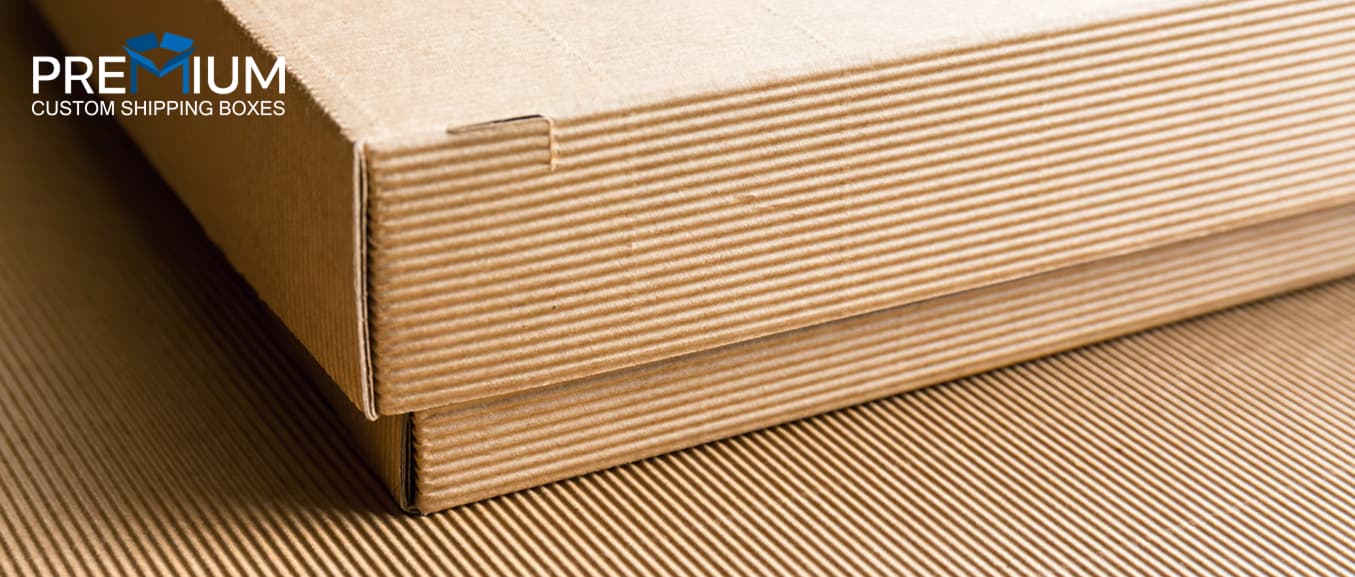
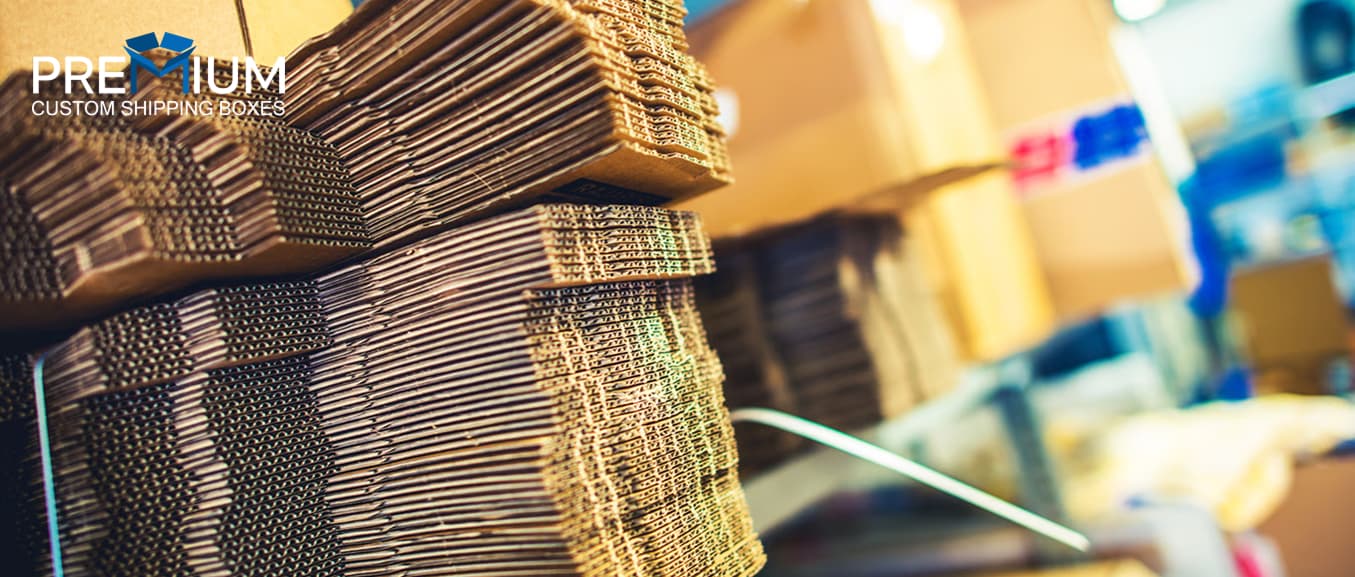
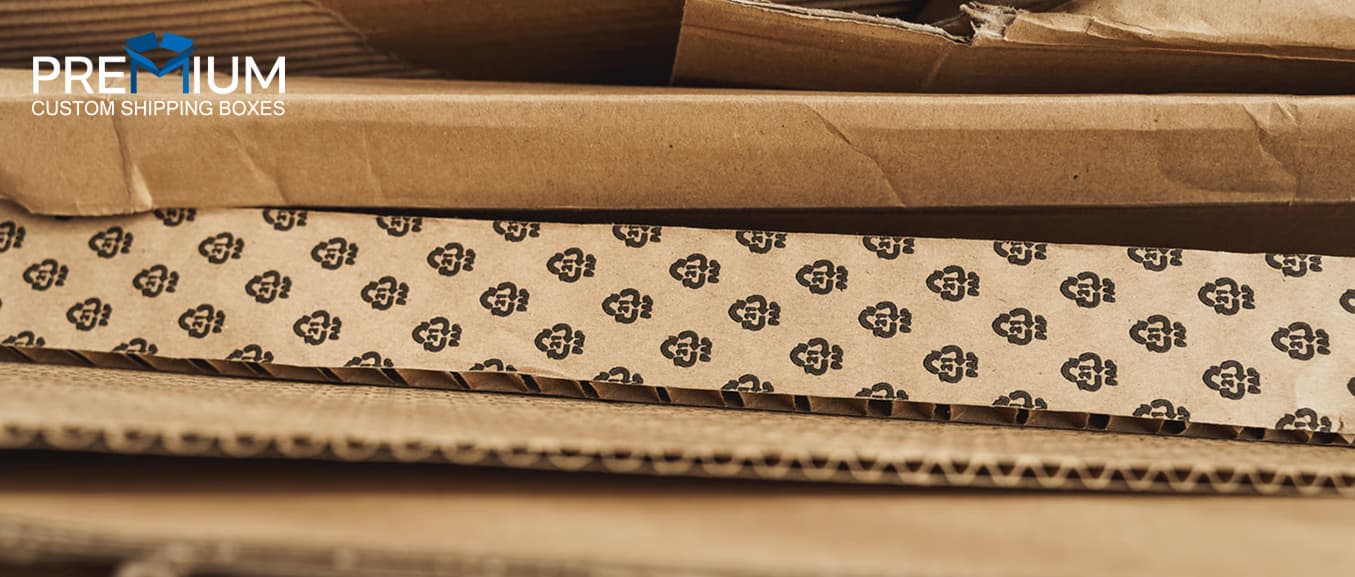
A corrugated box is made of corrugated fiberboard, which is made up of a fluted inner layer called the corrugated medium and a couple of outer liner layers. The fluted layer of the medium creates a corrugated structure. The boxes are made by gluing the layers together and cutting out the sides of the resulting structure. Corrugated boxes are used for shipping, storage, and retail. FEFCO describes the structure of corrugated board as a system that derives its strength from the combination of fluting and liners, and is stronger than the individual layers of paper.
When a buyer is considering a corrugated box for the first time, it is important to note that not all boxes of that design have the same specifications. Certain boxes may have varying combinations of flutes and liners, wall structures, and strength. Box designs may also differ in dimensions and printing.
Corrugated box | Cardboard/paperboard box |
Made from corrugated fiberboard | Made from solid paperboard |
Uses a fluted medium between liners | Has no corrugated fluted layer |
Designed for structural strength and protection | Often designed for lightweight product packaging |
Common for shipping and distribution | Common for folding cartons and retail packaging |
Can be single, double, or triple wall | Usually a single solid board structure |
Strength can be specified using ECT or burst performance | Typically specified by paperboard characteristics and application |
What Is A Corrugated Box?

A Corrugated Box is a box made from a fluted fiberboard sandwiched between two linerboards. The term Corrugated Box is sometimes confused with Corrugated Cardboard. The terms Corrugated Board, Liner, Medium, and Containerboard are also used by packaging professionals.
In the packaging profession, appearance is often used to describe Corrugated Boxes. For example, single face and single, double and triple wall structures are all described by their appearance. However, a better specification for a corrugated box would include the thickness of the fluted and liner boards and the types of materials used, the end use of the package, and the means of distribution.
Cardboard and Corrugated: What's the Difference?
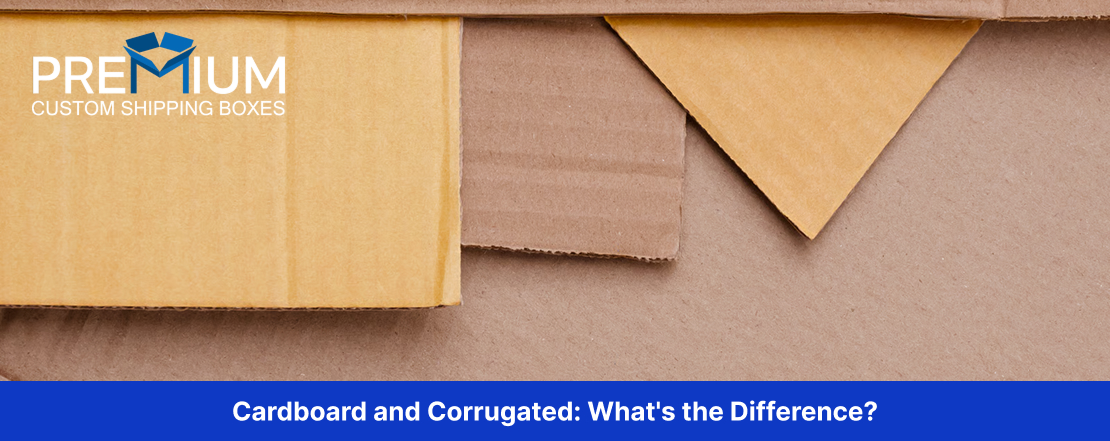
Cardboard and corrugated materials differ primarily in design. Corrugated materials contain a fluted Designing Medium sandwiched between two liners. Paperboard which does not contain this design element is commonly referred to as cardboard.
In the field of packaging, board materials and their derivatives are denoted by such terms as “Boxboard” and “Folding Carton.” Boxboards are typically used in packages containing cereals, cosmetics, videos, cassette tapes and compact discs, while Corrugated boards are used in shipments of commercial goods.
The term corrugated box is frequently confused with cardboard box. In the field of Packaging, both “Folding Cartons” and “Shipping Cartons” may be fabricated from paperboard. A “Shipping Carton” may be fabricated from corrugated fiberboard. The term “Folding Carton” may also be confused with “Corrugated Carton.”
What is a Corrugated Box Made Of?
A corrugated box is made of fluted medium, which is paper, and two liners, which are also paper. Corrugated box components are adhesively laminated. The fluted medium is rolled and then bonded to the two liners. The completed material is printed, cut, scored, and formed into the required package design. Recycled and chemical pulp liners and fluting used in combination with kraft paper liners make up the bulk of corrugated boards.
1. Linerboard
Linerboard makes up the inner and/or outer surface of Corrugated Board and may contain a surface coating and/or liner to enhance print quality. In addition to providing the surface for printing, linerboards also add to the structural strength of the corrugated board.
Various types of papers can be used in corrugated packaging. Other liner materials include white-top and testliner. Paper selection depends on functionality, aesthetic requirements, level of Print finish and the way the package is closed.
2. The Fluted Medium
In a corrugated board, the liner material gets a wave-shaped middle layer, called the Medium. The paper, before it gets the wave shape, gets bonded to the liner. The wave shape is formed by passing the paper through sets of rollers, which are spaced a certain distance apart.
The distance between the two rollers, determines the shape, size and profile of the wave.
Why it is called Corrugated
The word corrugated is used to describe the inner, wavy, medium layer of a corrugated board. To create separation between the two liners, the medium is given a wave-like shape. As compared to a flat sheet between the liners, creating the wavy medium improves the board’s ability to resist compression.
Another way of creating separation between the liners is to use multiple waves. This principle creates a double-wall and a triple-wall corrugated board.
Single, Double and Triple Wall
Single-wall structure comprises of two liners with a fluted medium in between. A double-wall structure has a fluted medium with a liner in between the two liners and a double-wall structure has a fluted medium with two liners in between the two fluted mediums. The ASTM standard defines single-, double- and triple-wall structures based on the number of facings.
Wall type | Basic construction | Typical application decision |
Single Wall | Two liners and one flute | General ecommerce and parcel shipping |
Double Wall | Three liners and two flutes | Stackable and higher distribution center demands |
Triple Wall | Four liners and three flutes | High-load and heavy-duty structures |
The table describes the basic design of various structures and wall types. The wall types and designs do not reflect an upper limit on the weight of the structures. The single-, double- and triple-wall structures are designed to have a higher limit on the weight of the structures, and the wall structures are meant to accommodate higher weights. ASTM D5639/D5639M-20 provides guidelines for the selection of materials and structures to meet the shipping needs of various products.
1. When single wall is enough
Single wall structures are appropriate when the product weight is within reasonable limits and the structures are not required to withstand greater distribution system demands.
2. When you need double wall
When more structural depth is required, double wall provides additional design options. Adding double walls can increase the capacity of a box to accommodate heavier items and withstand more stacking or distribution unit loads.
A box’s construction should not be chosen based on the subjective judgment of a product being “heavy.”
3. When triple wall is the answer
Choosing triple wall options provides the greatest structural depth. The addition of a third fluted wall and a fourth liner provides the greatest capacity for structural integrity and load strength.
Triple wall options should be considered when the distribution of packaged units contains large or heavy items.
Flute Profiles and What They Change
Flute profiles influence the overall thickness of corrugated board and how it absorbs and responds to shock. Different profiles can be used to achieve different functional, aesthetic, and protective features.
The letter designation (A, B, C, E and F) of a flute refers to the shape and thickness of a corrugated board’s vertical core. Profiles vary in the thickness of the board and the surface and crush behavior of the board. Profiles also impact the print quality of a board.
According to FEFCO, some general information on flute dimensions is provided in their publications. The Packaging Corporation of America states that flute profiles are comprised of the height of the flute and the number of flutes per foot. It is understood that the dimensions of flutes vary with the kind of machinery and method used for the installation of the flutes in the corrugated board.
Flute | Approx. Height (mm) | Approx. Number per foot | Key Application |
A | 4.8 | 33 | Cushioning and separation |
B | 2.4 | 46 | Compact construction |
C | 3.6 | 40 | General shipping applications |
E | 1.2 | 88 | Thin board & printed board |
F | 0.5 - 0.8 | 122 | Microflute |
According to FEFCO’s 2012 report, it is possible that the values for F flute may vary between 0.5-0.8 mm and 400-550 flutes/m, thus it may be prudent to evaluate the specific board against which the packaging is manufactured.
The flute profile is just one consideration; others may include the construction of the board, the strength of the board, the style of the box, and the expected service and use of the box. A C-flute box may be designed to hold a particular ECT value.
Common Styles of Corrugated Boxes
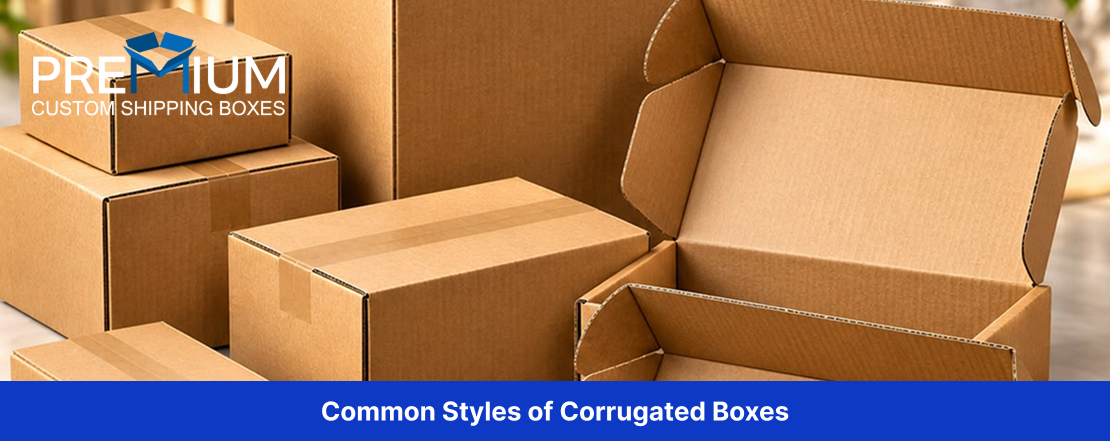
The style of a corrugated box describes the design of its folds, flaps, and closures. Box styles may also reference methods of box assembly. FEFCO's international coding system provides standardized numerical codes for communicating box designs.
FEFCO code | Technical name | What it does |
0201 | Regular Slotted Container (RSC) | General purpose slotted box |
0203 | Full Overlap Slotted Box | Full-overlap flaps provide additional overlap |
0401 | One Piece Folder | A folded box designed to enclose a flat item |
0427 | Folder-type die-cut box | Die-cut construction with integrated folding and closure features |
0713 | Ready-glued case | Pre-glued case designed for quick erection |
FEFCO codes 0200 series boxes as slotted boxes. The code system also outlines boxes used for retail and e-commerce, as well as boxes used for the interior packaging of products.
The RSC (FEFCO 0201) is the most common box design. This box style is used to define shipping box standards and test methods. This box style is referred to in standards as the Regular Slotted Box.
A slotted box is easily die-cut to a shape other than a rectangle. Die-cut containers are more expensive and are generally limited to special packaging. A departure from a rectangular shape is not always necessary and may be achieved simply by flexing the box wall in the required direction.
How Corrugated Box Strength Is Rated
Edge Crush Testing (ECT) determines how resistant corrugated material is to edge-wise crushing. Mullen burst testing determines what pressure is required to rupture the material. These tests should not be interchanged. ASTM D4727/D4727M-22 states that edge crush and bursting strength are two of the many performance measures of corrugated fiberboard.
Specification | Measurement | Unit | Product |
Edge Crush Test | Resistance to edge-wise | lb/in | Corrugated board |
Mullen Burst Test | Rupture under pressure | psi | Corrugated board |
Board Thickness | Thickness of board | in or mm | Corrugated board |
Box Compression | Compression of finished | lb-force | Finished box |
A Box Maker's Certificate (BMC) may appear on the outside of a box and describes the box construction as well as performance requirements specified by the box maker. ASTM D5639/D5639M-20 states that when a BMC is provided, the ECT or Mullen burst/basis weight values must be in compliance with requirements of the shipped product. A Box Maker's Certificate is part of the box specification.
What are Corrugated Boxes Used For?
Corrugated boxes are used for transport and distribution of goods, and for temporary and permanent retail packaging. FEFCO notes that the most common types of corrugated board packaging are regular slotted and die-cut boxes.
For an ecommerce retailer, a corrugated shipping box must be able to withstand compression and impact protection during transportation of the contained item.
When thinking about manufacturing, many factors go into the construction of a product. How a box is made can impact how a product is distributed, stored, and transported. For a product aimed at the retail market, appearance becomes very important, and a box may need to have a particular style or flute.
How to Choose the Right Corrugated Box for Your Product
When determining the right corrugated box for your product, you must match the requirements of your product and the box against four criteria: box style, box construction, flute profile, and strength. Furthermore, ASTM D5639/D5639M-20 states that the box construction and corrugated materials must be chosen based on the product, as well as the transport, storage, and handling conditions.
Step 1: Weight and Dimensions
The weight and dimensions of the product ultimately determine the dimensions of the box. However, a specification should consider the size of the product as well as the clearances required for the handling and transport of the product.
Step 2: Decide Wall Type
The number of liners (single wall, double wall, triple wall, etc.) must be chosen based on the weight and dimensions of the product to be transported.
Distribution also plays a key role in determining the type of packaging needed. The same product may be exposed to different packaging risks at each of the stages mentioned below.
It is important to take storage and distribution conditions into account. Certain levels of relative humidity may affect the paper and paperboard used for packaging. As such, a storage or distribution condition may require the use of a different packaging material.
Step 3: Flute and Print
A flute may be determined by the physical strength of the package, its cushioning capacity, and the thickness of the raw material.
Also, a package may require one type of flute based on physical strength and cushioning capacity, and a different type of flute for printed graphics. It is important that the packaging manufacturer take the above considerations into account while designing a package.
Conclusion
A customer’s first purchase of a package is an opportunity for the package manufacturer to provide the right type of package for the customer without the customer having to be aware of all the packaging terminology.
There are a number of factors that may affect the type of package required. Some of these include the weight of the packaged goods, the mode of transport, humidity, print quality required, and the environment the package will be stored in. A package manufacturer may assess these factors and suggest the right kind of package. This will allow the customer to have a ready package for selling their product.
Premium Custom Shipping Boxes can work from the product requirements instead. Provide the product dimensions, packed weight, number of units per carton, distribution method, stacking conditions, storage environment, print requirements, and approximate order volume.
Frequently Asked Questions
What is a corrugated box made of?
A corrugated box is made up of a fluted, fiberboard medium, sandwich-style, between two thinner liners. The whole structure is then glued and formed into a box. Some paper types used in corrugated production are testliner and kraftliner, semi-chemical fluting and recycled fluting, as identified by FEFCO.
What are uses of corrugated boxes?
Corrugated boxes are used in the transportation of products via pallets, storage in warehouses, and shipping products to retailers. Retailers further use these boxes to package and ship products to consumers. The type of box used is chosen based on the product being shipped and the logistics of shipping.
What are types of corrugated boxes?
Some types of corrugated boxes are telescoping and ready-glued cases. Boxes also vary by how they are closed, for example, by the use of slotted sides. Some boxes are pre-cut to specific shapes. FEFCO has a catalog of standard codes which are assigned to various box designs.
What do single, double, and triple wall corrugated boxes mean?
Single-wall corrugated boxes are made up of 5 layers, double-wall, 9 layers, and triple-wall, 13 layers. ASTM D4727/D4727M-22 gives these and other constructions of corrugated and solid fiberboard.
What is meant by corrugated boxes?
A box made up of corrugated fiberboard is called a corrugated box. The term corrugated is used to define the medium used to make the fiberboard, which is sandwiched between the liners.
What is the difference between cardboard and corrugated boxes?
Cardboard refers to a fairly broad spectrum of paper/paperboard materials and constructions. Corrugated, on the other hand, describes a very distinct and original structure consisting of a fluted corrugated, or in other words, a corrugated medium, sandwiched between two liners.
What is the process for determining the appropriate corrugated box for a given application?
One considers several general conditions such as the weight and dimensions of the product, the number of units per box, the fragility of the product, the humidity of the environment in which the product will be stored, the humidity of the environment in which the product will be transported, the length of the distribution channel, the method of transport, print requirements, and, last but not least, the cost.
What is a corrugated shipping box?
A corrugated shipping box is a corrugated container designed for transporting products through a distribution network. The most familiar format is the Regular Slotted Container, or FEFCO 0201, although other styles may be better suited to specific products and packing processes.
What is a corrugated shipping container?
A corrugated shipping container is a container manufactured from a corrugated material for the shipping and transmission of products within a distribution system. The Regular Slotted Container (RTSC) or FEFCO 0201 is the most prevalent and recognizable example of a shipping container.
What is the difference between corrugated and cardboard boxes?
Corrugated boxes are made of a fluted, corrugated medium that is sandwiched between two liners. Boxboard, or cardboard, is solid. Corrugated boxes are designed to be shipped and to protect the contents during transport. A box made of boxboard is designed to be folded and will not have the same strength as a corrugated box.
What information should I provide to a box manufacturer to have a box made to order?
The more information you can provide, the better. You should provide the dimensions of the product, the weight of the product, how many units will be in a carton, how fragile the product is, the expected height of the carton, the distribution of the product, the storage conditions of the product, and the printing requirements. The manufacturer can help with the remaining questions.