Packaging Materials Compared: Kraft vs SBS vs Corrugated for Custom Boxes
Choosing packaging materials for boxes starts with one practical question: what does the box need to do?
A retail carton might require sharp graphics and a smooth surface. A shipping box must be strong enough to withstand compression and yet be strong enough for handling. A substrate and coatings appropriate to the food contact application may be required for a food package.
When comparing US brands of SBS paperboard, kraft paperboard, and corrugated paperboard for a packaging quote, product weight, shipping conditions, print specifications, box style, food-contact status, and presentation goals all have an impact on which one to choose.
SBS, SUS, CUK, CRB, and FBB are the different grades of paperboard that can be used for folding into cartons, with corrugated board contributing fluted construction when extra protection is required.
Material | Appearance | Print quality | Protection | Typical use | Relative cost |
SBS paperboard | Bright white | Excellent | Moderate | Premium retail cartons | Higher |
CUK/kraft paperboard | Natural brown or white | Good | Moderate | Natural, retail and specialty packaging | Moderate |
CRB paperboard | Recycled gray or coated surface | Good | Moderate | Cost-conscious retail cartons | Moderate |
Corrugated | Kraft or white outer liners | Good to excellent, depending on flute | High | Shipping and protective packaging | Varies |
Premium custom shipping box guidance, instead of a market-wide price or percentage. Final pricing is dependent on the dimensions, board specification, printing, quantity, construction, and finishing.
What is SBS Paperboard and What is SBS Board?
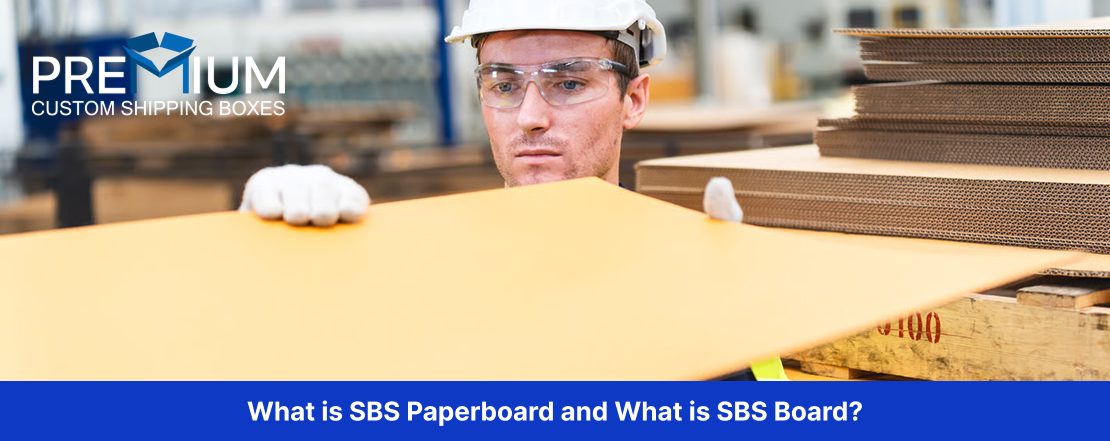
SBS paperboard is the Solid Bleached Sulfate paperboard grade, which is the most virgin fiber paperboard grade and is especially suitable for high-quality printing uses and retail packaging applications. US brands looking for premium finishing and accurate color reproduction over the best shipping strength should consider using SBS paperboard.
Solid bleached sulfate (SBS). The bleached process yields a clean white substrate to serve as a consistent base for printing with CMYK and Pantone.
As such, SBS board is especially beneficial for cosmetics and personal care, electronics, premium foods, candles, supplements and other products where packaging is a brand experience.
Currently, Premium Custom Shipping Boxes has SBS paperboard in C1S and C2S; the listed thicknesses range from 14pt to 24pt for some packaging applications. Its product data further cites that SBS can be used for retail trays, window boxes and other packaging used for presentation.
Why is SBS paperboard a popular choice for printed boxes?
The white surface of SBS paperboard is smooth, which is the perfect base for detailed graphics. In most cases, logos, photos, etc., and gradients will look more consistent across different substrates that are not brown.
Due to the type of box design and production specification, finishing options for SBS paperboard include matte or gloss coatings, soft-touch effects, embossing, debossing, foil stamping, and spot UV.
That's why printed SBS paperboard is often used in products where the package offers a nice appearance before the consumer even opens it up. An important difference is structure. The paperboard that is sold as SBS paperboard is not corrugated board. However, a thicker SBS carton can be useful for rigidity, but it is not a good idea to replace corrugated just because the package needs to withstand a significant amount of shipping impact or stacking loads.
What Is Kraft Paperboard, Coated Unbleached Kraft and CUK Paperboard?
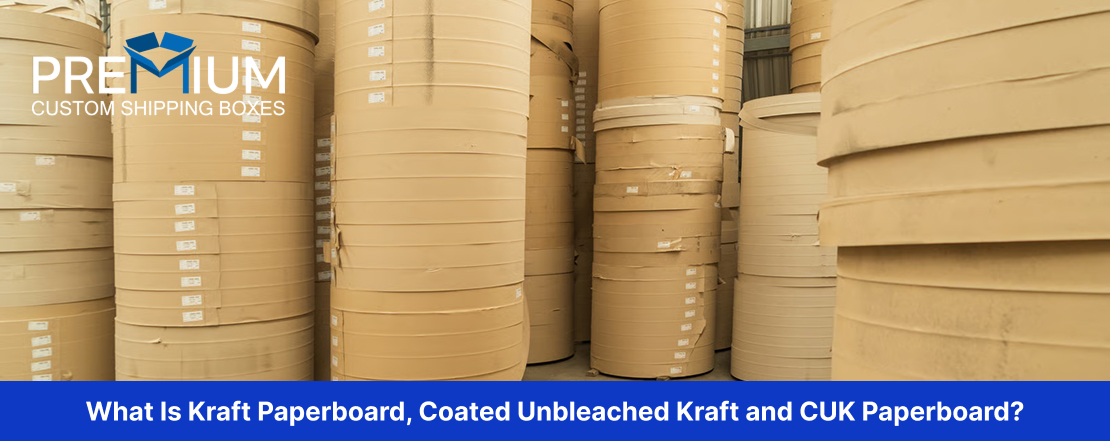
Kraft paperboard is a high-strength kraft paper-based substrate that is typically brown in color, and CUK (coated unbleached kraft) is a similar paperboard that has an unbleached kraft fiber base and a printable surface that is coated. Ideal for brands wanting a natural visual identity and a handy-to-print feature.
The terms can cause confusion on packaging quotes. The term "kraft" is used to describe fiber, and the term "CUK" paperboard is used to describe a specific coated unbleached kraft paperboard construction.
Natural kraft is not paperboard and will normally be a brown base. That alters the way that printed colors look. If a bright-colored area is required for a design, use white ink; printing directly on the brown kraft creates a more earthy look. That disparity could be a good thing for your brand.
The coffee company, the natural cosmetics company, the craft product company, or the subscription company can choose the kraft material consciously, because the material itself exerts a certain visual character without too much graphic.
Premium Custom Shipping Boxes mentions kraft as a choice of packaging materials and says kraft is used for retail, gift, food, and specialty products.
What Is Coated Recycled Board and CRB Paperboard?
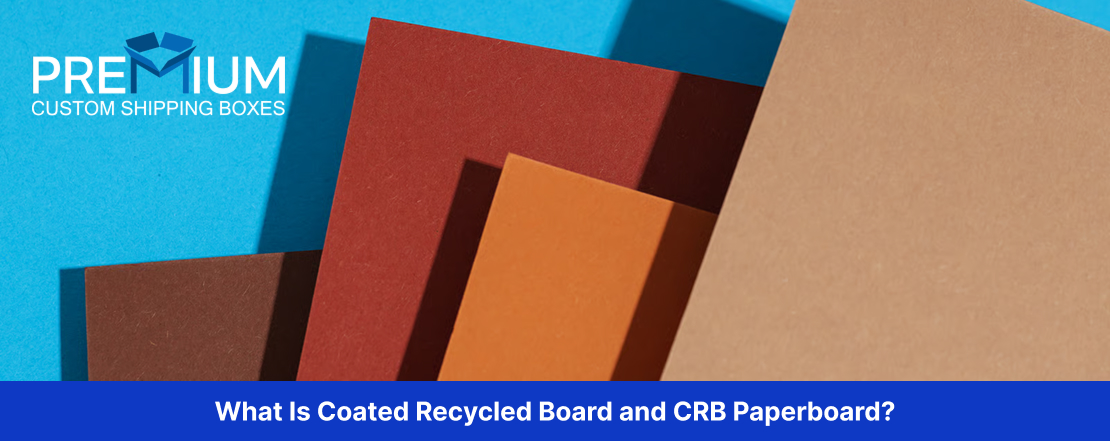
Coated recycled board, also known as CRB paperboard, is produced with recycled fiber and is coated with a surface that enhances printability over uncoated recycled board. If recycled content is a key component of a packaging specification and the product doesn't demand the white look of SBS, then CRB can be beneficial.
Do not consider CRB as a substitute for any other recycled paperboard. The amount of recycled content, coating, caliper, stiffness, and surface quality may vary between grades and suppliers.
When it comes to the items for sale, the questions that come to mind for the buyer are:
What percentage of the board is made up of recycled content?
Do both sides of the surface have a coating on them?
What is the recommended print quality of the supplier?
Is the final box to be coated or laminated?
Is the board suitable for the product and packaging situation?
According to the Paperboard Packaging Council, virgin and/or recycled grades of folding carton can be used, such as SUS, SBS, CUK, CRB, and FBB.
This means that CRB is not a single material, but a possibility to consider in discussion with a packaging supplier.
Kraft vs SBS: Kraft Paperboard vs SBS Board for Custom Boxes
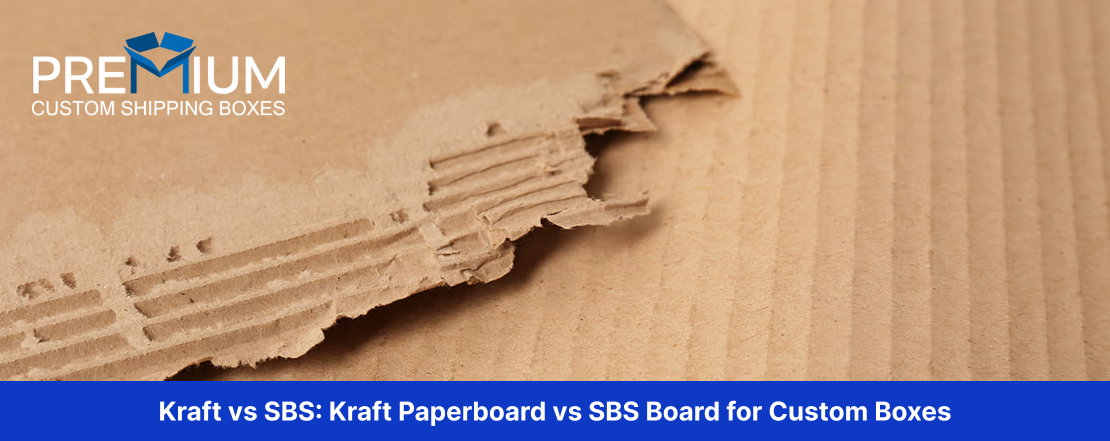
Kraft is generally preferable if the natural appearance and a paper-based brand identity are important, but SBS is generally preferable if bright graphics, fine detail and premium retail presentation is important. There is no better material for all custom boxes.
The most obvious difference is the colour of the substrate.
Attribute | Kraft paperboard | SBS paperboard |
Base appearance | Natural brown or white | Bright white |
Color reproduction | More muted on natural kraft | Strong color contrast |
Natural aesthetic | Excellent | Low to moderate |
Fine graphics | Good | Excellent |
White ink | Useful for selected designs | Usually less necessary |
Premium finishing | Available | Specially suited for premium finishing |
Typical positioning | Natural, simple, artisanal | Premium, polished, high-impact |
Retail shelving brands may find that when the package must be printed exactly as a design, SBS paperboard might be appropriate.
If your packaging is an integral part of the product itself, kraft paperboard might be a more suitable choice for your brand. Premium Custom Shipping Boxes supplies both materials, and the specification is not mandated; it transcends the product.
Corrugated vs Paperboard: When to Use Corrugated Instead of Paperboard?
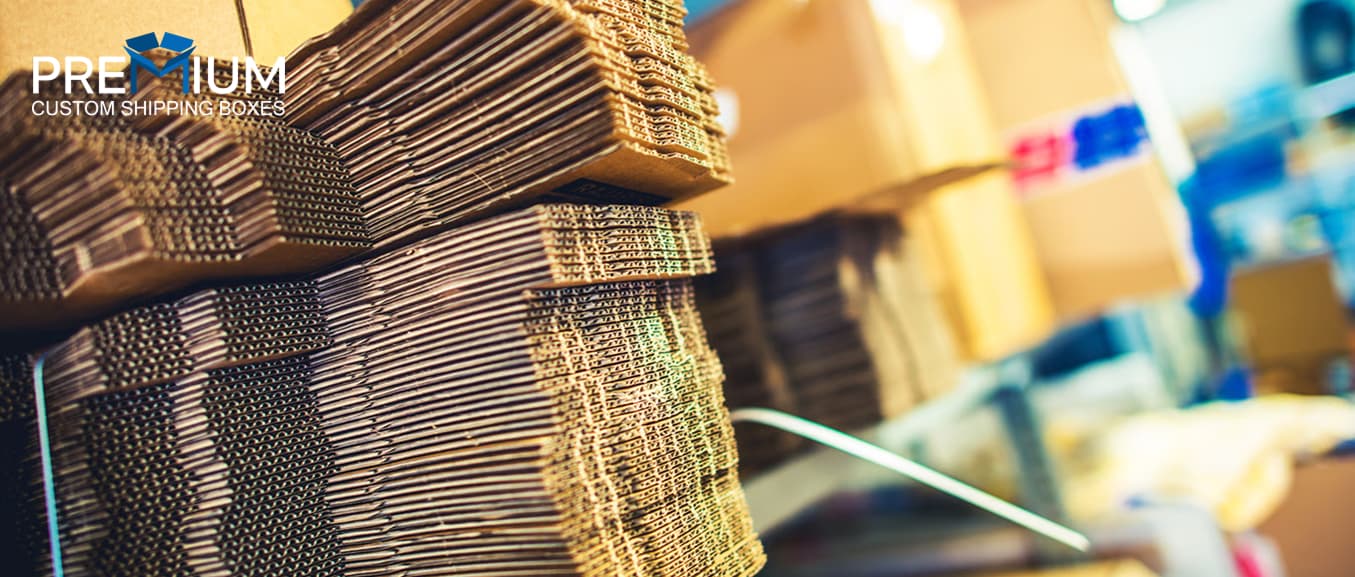
If the box requires more protection, stacking strength, or cushioning during shipping, use corrugated rather than solid paperboard. Paperboard is usually used to fold cartons and for retail presentation, while corrugated is often used to provide a fluted inner layer between the linerboards to provide a stronger structure for the packaging.
The key difference in the corrugated vs paperboard situation is that corrugated is used for stores and non-stores, whereas paperboard is employed in stores. A light cosmetic carton placed on a retail shelf does not necessarily need to have the same structure as a carton that is used to transport several pounds through a parcel network.
Corrugated packaging constructs make use of fluted paperboard between linerboard to offer extra protection, and folding cartons are generally produced from 10pt to 36pt board paperboard packaging.
Premium Custom Shipping Boxes provide corrugated boxes with B-flute, E-flute, and single-wall, double-wall, and triple-wall constructions for varying degrees of protection.
E flute vs B flute: What is E flute, B flute, and C flute?
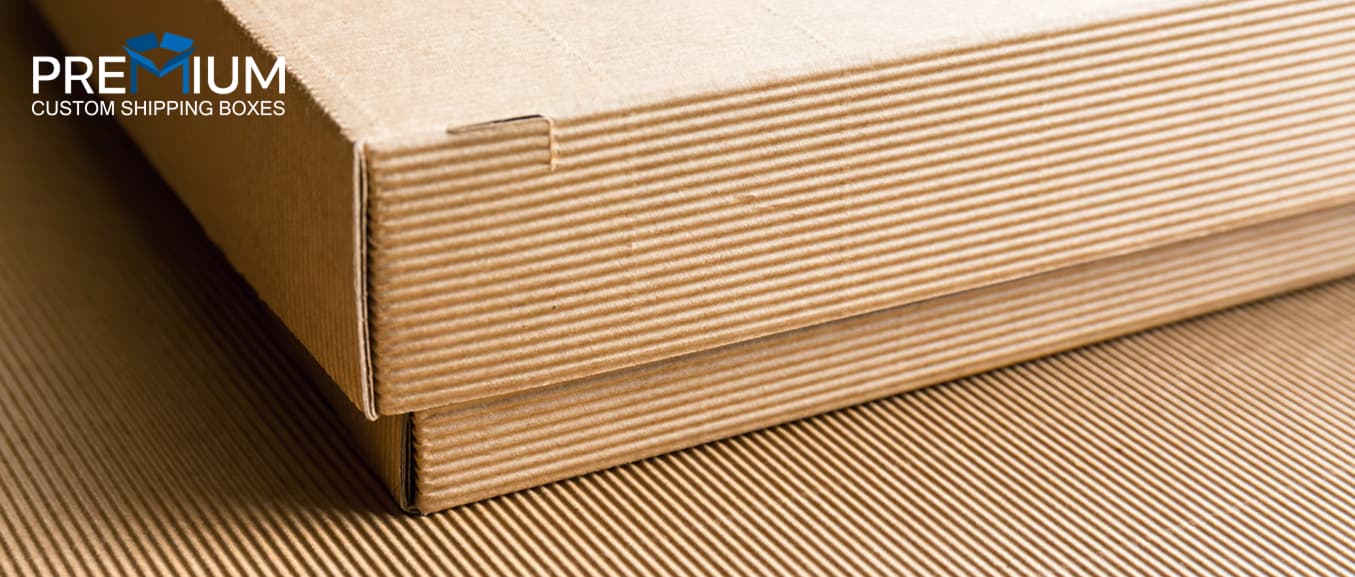
There are a few different flutes: E-flute is a relatively fine corrugated flute that will provide a good printing surface and compact packages; B-flute is thicker and is suitable for many shipping applications; and C-flute is a larger general-purpose flute, mostly used when increased shipping durability is required.
The flute is the dimension and gap of the corrugated wave within the board. It impacts thickness, cushioning, stacking, and the final package's look.
Flute | General characteristic | Typical application |
E-flute | Thin, fine flute | Mailers, retail packaging, presentation shipping |
B-flute | Thicker and more protective | Shipping boxes, product mailers, stronger retail packaging |
C-flute | Larger, versatile flute | General shipping and distribution |
F-flute | Very fine flute | Small retail cartons and specialty applications |
Whereas, the decision of which flute to use, E flute vs. B flute, may be determined by the need for presentation or protection.
Premium Custom Shipping Boxes has differentiated its custom mailer boxes series as follows: E-flute is ideal for a streamlined finish, while B-flute provides increased durability. When deciding on which corrugated board to use, the supplier should look at the name and also the specified strength of the board for heavier products, stacking requirements, or if parcel shipping is required.
Paperboard vs Cardboard: What Is the Difference for Packaging Materials for Boxes?
Paperboard" is a paper-based board that is commonly used for creating folding cartons, and “cardboard” is a general term used outside the packaging industry that refers to a number of paper-based packaging materials. In commercial packaging specifications, the specific grade, caliper, and construction are more important than the general term cardboard.
Cardboard boxes” may mean SBS paperboard, kraft board, recycled board, or corrugated board. Therefore, when looking for a packaging quote, it is essential to get the correct packaging substrate identified.
For instance, an 18pt SBS carton and a B-flute corrugated mailer are both simply referred to as cardboard boxes, but their make up and function could not be more dissimilar.
When considering various box packaging materials, request the material grade, thickness or caliper, flute (if any), coating, liner specification, and use.
Which Material Is Best for Food Packaging?
Not all board grades are automatically qualified for specific food applications; materials and components for food packaging must be appropriate for the intended food contact/conditions of use. Some of the FDA 21 CFR 176.170 requirements for paper and paperboard in contact with aqueous and fatty foods include extractives limits.
This implies that a supplier cannot just say to a buyer that “SBS is food safe” or “kraft is food safe” without taking the end product into account. The paperboard is just a part of the package. Inks, coatings, adhesives, barriers, windows, and other printing elements can impact the final package.
The food-contact surface of paper and paperboard is covered under the FDA regulation with defined conditions for use.
When purchasing bakery, confectionery, frozen-food and beverage packaging, let your packaging supplier know exactly what the final packaging will be used for and whether the food is aqueous, fatty, dry, hot or cold.
Food-related packaging applications and materials offered by Premium Custom Shipping Boxes range from cookie boxes, chocolate boxes, cereal boxes to frozen food boxes, and can be SBS, kraft, coated board or corrugated structures. When designing a food contact project, ask for the relevant material and component documentation before production, instead of the generic material label.
Which Material Is the Most Sustainable?
Simply put, there is no single “most sustainable” packaging material since sustainability will vary based on fiber source, recycled content, packaging manufacturing, coatings used, packaging construction, and the possibilities for re-use and local recycling infrastructure. When used with the right specification, Kraft, SBS, recycled paperboard, and corrugated can all be used to meet various sustainability goals.
Responsible sourcing of forest-based materials and the chain-of-custody system of certified products are the topics of FSC certification. Additionally, under its labeling rules, FSC identifies FSC Recycled products, which are made from 100% reclaimed material. The term "sustainable" needs to be translated into a specifiable requirement for the buyer.
You might want to consider:
Sustainability Priority | What to Ask the Supplier |
Responsible virgin fiber | Is FSC-certified material available? |
Recycled content | What percent is from post-consumer or recovered fiber? |
Recyclability | Is the completed building part of the local recyclable stream? |
Fewer materials | Can there be any unnecessary plastic windows or laminations be removed? |
Lower material use | Can the box be redesigned without compromising protection? |
Shipping efficiency | Can dimensions be reduced while maintaining product protection? |
Premium Custom Shipping Boxes claims that its shipping boxes are custom shipping-box products, and that it sources its boxes from suppliers certified by the FSC, and uses water-based inks in its custom shipping-box products.
It is not the same as every finished package being FSC certified, however, if there is a particular claim that users need to have for purchase, they should check the FSC certification and labelling requirements for their purchase.
Which Materials for Boxes to Purchase?
Use SBS paperboard for high-value printed retail cartons, kraft or CUK for a natural look, CRB for recycled content, and corrugated for shipping protection/strength.
Use SBS paperboard for quality printed retail cartons, kraft or CUK for a natural 'face' to a carton, CRB when recycled content is desired, and corrugated when shipping protection and strength are the key considerations.
Product or Application | Product Weight | Main Priority | Recommended Starting Material |
Cosmetics Carton | Light | Print and shelf appeal | SBS paperboard |
Premium Candle Box | Light to medium | Presentation | SBS paperboard |
Natural Soap or Specialty Product | Light | Natural appearance | Kraft paperboard |
Recycled-focused retail carton | Medium to heavy | Recycled content | CRB |
Subscription mailer | Light to medium | Shipping plus presentation | E-flute corrugated |
Heavier ecommerce product | Medium to heavy | Protection | B-flute or other suitable corrugated |
General shipping carton | Medium to heavy | Compression and transit protection | Corrugated |
The table does not have to be used as a packaging specification, but rather is a starting point. The recommended substrate can vary with box dimensions, product weight, drop risk, stacking and closure style, and shipping method.
What Should You Send to a Packaging Supplier?
Provide the supplier with 5 pieces of information:
Product size and weight
Retail Display (or indicating the box is intended for retail?) or shipping, or both
Pre-determined colours and finishes desired
Any food contact and sustainability needs
Anticipated order quantity and desired delivery dates
A supplier is then able to compare substrates to the real application rather than using a box style quote
Conclusion
Brands that are still not certain about SBS paperboard vs. kraft paperboard and corrugated paperboard will find that physical samples can be quite helpful. Before committing to production specifications, you can make comparisons of stiffness, surface texture, color reproduction, and overall presentation.
If you don't know which board to select, please refer to the specifications listed above.
Printing information is a minor detail that has a big impact on print quality, protection, print appearance, the option of sustainable packaging, and the final customer's experience.
Premium Custom Shipping Boxes can assist you in comparing the options of SBS paperboard, kraft, CUK, CRB, or corrugated with your product and the packing needs you have for your new custom box. Request samples from Premium Custom Shipping Boxes prior to ordering. Use the physical board and printing and construction side by side to compare, and then choose the specification to suit the product.
If you are looking for custom boxes for your project, you can also see custom shipping boxes, custom mailer boxes, retail packaging, and eco-friendly sustainable shipping boxes before you place your order for a quote.
Once you're ready to compare materials, dimensions, printing and finishing options for your particular packaging, you can get a custom packaging quote from Premium Custom Shipping Boxes.
Frequently Asked Questions
What is paperboard made of?
SBS paperboard is Solid Bleached Sulfate paperboard, which is one of the brightest white paperboard grades used for folding cartons as well as high-quality retail packages. It has a smooth surface, suitable for fine printing and decorative finishing.
What does it mean by kraft vs. SBS?
The overall tone of Kraft is typically natural, like paper, and can lend a natural or minimalist vibe to a brand identity. The bright white surface of SBS paperboard offers excellent colour appearance and a more refined retail look.
What are the various categories of paperboard?
Typical grades of paperboard are SBS, SUS or CUK, CRB and FBB. The grades have different fiber compositions, coatings, appearance, printability, and typical package applications. These are among the types of board used in folding cartons according to the Paperboard Packaging Council.
Does SBS board have a higher strength than kraft paperboard?
The strength is subject to the type of grade, caliper, and box construction. Stiffness and print quality are often desired in SBS, while kraft grades can offer good tear and structural properties. When comparing corrugated to solid paperboard grades, it is better to make the comparison in specific situations of demanding shipment than to just exchange between grades.
Can we recycle SBS paperboard?
The successful recycling of paperboard is highly reliant on the final construction and recycling facilities in the area. The recycling pathway can be impacted by coatings, laminations, windows, etc. Assume that not all SBS packages are accepted by all municipal recycling.
When to use corrugated vs paperboard?
Use corrugated for packages that require more protection during shipping, stacking, or handling. E-flute is frequently used for compact mailers and retail presentation, and B-flute is used to give more protective structure.
What's the difference between E-flute and B-flute?
E-flute is a thinner type of corrugated and is usually selected when a compact package and a smooth appearance of the printed surface are critical. B-flute is thicker and often chosen for increased shipping strength.
So what is the most inexpensive material for custom boxes?
There is no general rule for which material is the cheapest. The pricing of Premium Custom Shipping Boxes can be treated as application-specific because all elements, including dimensions, quantity, construction, printing, and specification and finishing of the material, will impact the price. Request similar samples and quotes, with box sizes and quantities.
Is SBS more sustainable than kraft paperboard?
Not automatically. Sourcing of fibers, recycled content, coatings, manufacturing, and recycling pathway of the packaging are all important to consider when it comes to sustainability. FSC can offer a credible structure for responsible sourcing of forests.
Is it possible to package food with SBS paperboard?
Some paper and paperboard designs are suitable for food contact uses if the final materials and components meet the requirements of the FDA. In FDA 21 CFR 176.170, the requirements for paper and paperboard used in contact with aqueous and fatty foods are stated.
Do Premium Custom Shipping Boxes offer samples of their material?
Premium Custom Shipping Boxes provide physical samples of all packaging products, which users can test before placing a larger order for the material and box quality.